
Mango is a delicious tropical fruit that has a rich sweet taste and can be extremely beneficial to our health. This yellow fruit has three great nutrients that fight against free radicals, beta-carotene and vitamin C and E. It is believed that the origin of the mango comes from the Himalayas, northwest of India, and that for more than 4000 years it has been cultivated in Southeast Asia. The story goes that thanks to Buddhist monks, Persian, Spanish Portuguese and English traders, mangoes have been transported to millions of warm corners of the world.
For this reason, the mango has earned the title of the national fruit of India, from which hundreds of legends native to the area are developed. In addition, it is estimated that approximately 14 tons of mango are produced annually in this country.
⭐ List of Mango Ice Cream Recipes ⭐
3. Homemade mango ice cream recipe
4. Mango ice cream without milk

Mango Properties
Mango is a fruit rich in vitamins, minerals and nutrients, such as:
Rich source of magnesium and potassium.
fundamental minerals that help reduce the effects of tiredness and fatigue. They promote good muscle function and prevent oxidative effects caused by free radicals.
High in vitamin E
It is estimated that a serving of 200 grams of mango can contain up to 2.3 grams of Vitamin E. This is very important to keep the nervous, cardiovascular and muscular systems healthy, as well as to promote skin health.
It has depurative acids:
such as malic and tartaric, which act in the body, counteracting the negative effects of acidic metabolic waste.
High content of Vitamin C and A:
both fundamental for the functioning of the organism, which also provide a wide variety of health benefits such as: caring for nails and hair, protecting the skin, preventing the effects of aging and providing energy to the body, among others.
Benefits of Mango
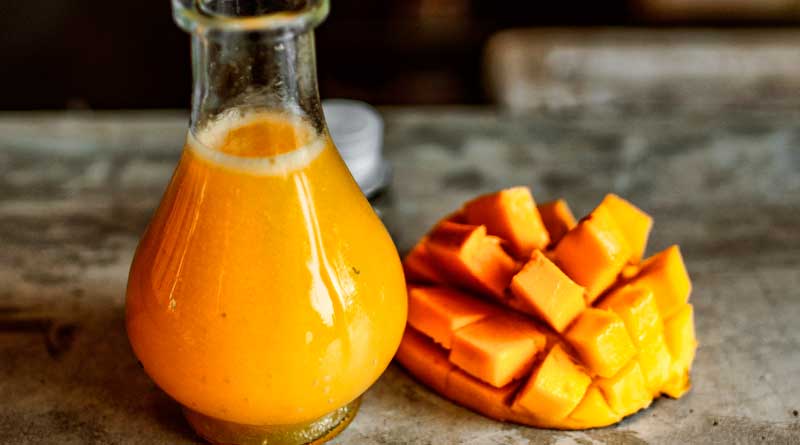
Now that you know some of the vitamins and nutrients present in this tropical fruit, let’s talk about the mango benefits we get from consuming it:
Strengthens defenses
Vitamins, antioxidants and minerals present in its composition, strengthen the immune system, thus helping the body to fight different types of diseases.
Prevents constipation
Due to its high fiber content, mango prevents the onset of constipation symptoms, and in turn, lowers levels of bad cholesterol, which also means that it protects the cardiovascular and circulatory system.
Stimulates the assimilation of nutrients
Thanks to its enzymes, mango is an easy-to-digest food. These are also responsible for promoting easy assimilation of macronutrients. That is why it is said that it also purifies the stomach and intestine.
Promotes bone and muscle health
Its high combination of potassium and magnesium keeps the musculoskeletal system in good condition, thus preventing the onset of muscle cramps and bone diseases such as osteoporosis.
Protects mucous membranes and skin
This is due to the properties of beta-carotene, which combat the action of free radicals that affect the heart, skin, eyes and mucous membranes.
Types of Mangoes
It is estimated that there are more than 40 different mango species spread around the world. All of them can vary in terms of flavor, size, texture and color. However, large multinational food companies tend to favor certain species, due to their ability to resist pests, as well as their pleasant flavor that tends to delight the palate of the Western population. Some of the most common types of mangoes are:
Osteen
Its weight varies from 600 to 700 grams per piece and when they reach their exact ripening point, they usually have a reddish-orange color with some crimson spots on the top and a touch of green at the base. It is a mango with a fairly smooth, non-fibrous texture and a light, sweet flesh.
Palmer
the skin of this species, usually turns purple just before reaching maturity, but as it matures, it acquires a reddish tone. It is also characterized by a low-fiber pulp, with a penetrating sweetness and aroma.
Camboyana
a species that can measure 10 to 12 centimeters long and 6 to 7 centimeters wide. They have a peculiar elongated shape of yellowish green color. Its shell is very thin and its pulp is very juicy, with a predominant aroma and a light touch of acid flavor.
Haden
stands out for its strong red and green color with some yellowish shades. It has a very firm flesh with fine fibers and an intense fragrance. This species became popular in Florida after a retired U.S. officer planted about four dozen mango trees. Although its commercial success has declined in recent years, in the early 20th century it became one of the most traded mangoes in the world after its production was encouraged in Florida, USA.
Keitt
The sugar content is slightly lower than that of its sister species. Its pulp is firm, with no fibers. Its flavor is quite exotic as it combines its sweetness with a particular acid touch. Mangoes of this species usually reach a weight of 600 to 750 grams.
Manila
one of the most recognized worldwide, can measure up to 10 centimeters in length. Its color varies between green, yellow and red. It has an oval shape and its pulp is very tasty, with a sweet and fleshy nature.
Homemade Mango Ice Cream Recipe
Now that you know much more about this sweet tropical fruit, you already know that it is an excellent option to prepare a refreshing ice cream. For the mango ice cream recipe you will need the following ingredients:
- 1 mango, the type of your preference.
- 1 lemon.
- 125 grams of milk cream or cream.
- 50 grams of sugar.
- 15 grams of honey.
- 1 pinch of salt.
How to make homemade creamy mango ice cream?
Once you’ve gathered all the ingredients, then it’s time to put on your apron and head to the kitchen to follow these steps to the letter:
- Chill the cream for 10 minutes inside the fridge, as well as the whisk and sugar. Then add the cream to a bowl and start whipping to whip it. Make sure that no peaks form and gradually add the sugar.
- Continue, peeling the mango and extracting as much pulp as possible, to take it to the blender with the lemon juice, salt and honey. Be sure to blend everything until the mixture acquires a creamy consistency similar to that of a mango puree. You can taste it, and if you think it needs a little more sugar, you can add it.
- Now, with the help of a pastry tongue, pour the mango mixture over the cream and whisk in an encircling motion.
- Once you are done, you will have a super smooth and creamy mixture. Pour it into a container with a lid or a bowl that you can cover with cling film.
- Store it in the refrigerator for a whole day and take it out 10 minutes before serving to finally enjoy it in your favorite presentation.
Dairy Free Mango Ice Cream Recipe
An easy mango ice cream recipe that you can prepare in a short time in a quick and easy way. Pay attention, because below, we will tell you how to make mango ice cream without milk. For this, you will only need two mangoes of the type of your choice. Once you have them, then you must follow this step by step:
How to make Mango Ice Cream Recipe without milk?
- Start by peeling the mangoes and cutting them into small pieces as if they were ice cubes.
- Then you should put the mango pieces in the freezer for at least 12 hours. If you can, place them on a tray or plastic bag, strategically, so that they do not pile up and turn into a big ice cube.
- After 12 hours, then proceed to pour the frozen fruit into the blender and blend at medium speed, until you notice that the fruit pieces stop hitting the blender beaker.
- Once you observe that the mixture has acquired a creamy, homogeneous texture and no chunks are present, then you can serve your mango sorbet in the way you prefer. Enjoy!
Mango Popsicles with Yogurt Recipe
If you want to learn how to make mango popsicles with yogurt, then you’re going to love this recipe. To make it, you will need these ingredients:
- 5 ripe mangoes or 20 ounces of the frozen fruit.
- ½ cup of sugar or honey.
- 3 cups of plain or vanilla yogurt.
How to make mango ice cream with yogurt?
Now for sure you are wondering how to make mango ice cream with 3 ingredients, and the answer is below. Let’s get down to work and prepare some tasty mango popsicles with yogurt. Let’s get started!
- Start by taking the blender and adding the mangoes, honey or sugar and yogurt. Let them blend well until you get a smooth, homogeneous mixture, similar to the look of a creamy milkshake.
- Once ready, pour the mixture into the popsicle mold. If you don’t have one, then you can use disposable plastic cups, and wait for them to freeze a little, then place the popsicle in them and return them to the freezer for at least 4 hours. This will depend on the freezing capacity of your refrigerator.
- Check that they have the right consistency and when you think they are ready, moisten the bottom of the mold for 10 seconds, so you can easily remove your popsicles, which are now ready to enjoy.
 Based on 1 Review(s)